Where did you grow up, and how did your upbringing influence your values and worldview today?
I grew up mostly in South Australia, but I also spent time in Sri Lanka and India as a little girl. That experience of being between cultures and expectations really shaped me. I learned early on that home is not always a place, it’s a feeling. My upbringing taught me to adapt to listening between the lines, and to speak up for those still finding their voice. That ability to bridge silence and story influences everything I do today.
Were there early signs in your childhood or teen years that pointed toward your passion for performance, leadership, or advocacy?
Absolutely. I was the little girl turning living rooms into stages, heartbreak into poetry, and playgrounds into performances. I had a deep knowing even then that empathy was my superpower and that I was born not just to entertain, but to elevate. Even at two or three years old, I’d introduce myself to strangers in shopping malls and ask them to tell me about their lives!
What challenges or pivotal experiences shaped your sense of identity as a woman and leader?
Surviving domestic and family violence was a turning point. It shattered me but also remade me. I learned to gather the broken pieces and rise not just for myself, but for my children. That experience taught me that real leadership is about holding grief and grace in the same breath. It’s about choosing to rise, even when the world tries to silence you.
What attributes do you believe are Stellar Woman attributes?
A Stellar Woman radiates from the inside out. She leads with purpose, listens with presence, and lives with dignity. She has equal parts, softness and steel. She lifts others as she rises, and her self-worth is never up for negotiation.
Farah, your presence at the Women Changing the World Awards was magnetic. What does it mean to you to be a vessel for elevating energy in a room full of changemakers?
It’s sacred. When I step into a room, especially as an MC (master of ceremonies), I set the intention that my words, poems, and energy will touch each woman’s heart. My job is to ignite their inner flame, to hold space for courage, connection, and remembrance. I’m not performing; I’m channeling something bigger than myself.
This issue is the “Play Big” theme. How would you define ‘playing big’, not just professionally, but soulfully?
Playing big isn’t about fame or followers. It’s about showing up fully, telling your truth, even when your voice shakes, and creating ripples that turn into waves of impact. It’s the act of daring to be your fullest self in a world that often wants you to shrink.
As an actress on Neighbours, what has performance taught you about courage and emotional truth?
Acting invites you to feel everything deeply, honestly, and unapologetically. It strips you bare and teaches you that courage isn’t the absence of fear, it’s the grace to stand in vulnerability and choose love anyway.
Do you find that acting gives you permission to explore parts of yourself that you might not otherwise access? What have you enjoyed the most?
Absolutely. Acting has helped me explore my shadow and rediscover my softness. When I played Katrina Marshall, I was going through a tough personal season, and I borrowed her strength. That character became a gift, a healing vessel. On some days, I wasn’t acting, I was just showing up as the most empowered version of myself.
Was there a moment on set where you realised: ‘This is bigger than acting, this is healing’?
Yes. Katrina was fighting for justice, just like I was in real life. That alignment reminded me how storytelling can shift perspectives, soften hearts, and spark healing, not just for the audience, but for the performer too.
What was the spark behind founding The Self-Worth Movement? Did it come from a personal breakthrough?
It started with a poem, She Shines. I wrote it after seeing a woman on a train who looked radiant but broken, just like I once felt. That poem became a love letter to her, to me, and every woman. Years later, it evolved into affirmation cards, workshops, a publishing platform, and now The Sparkle Squad Girls. It was born from healing, and it continues to heal.
When did you realise your story could ignite power in others, especially in women recovering from trauma or abuse?
When I finally shared, She Shines publicly, women began reaching out to say, “That’s my story.” Some were survivors of abuse. Others were navigating health crises or identity loss. That’s when I realised sharing isn’t just brave, it’s an act of service. Our stories become bridges.
How does the work you do with Sparkle Squad Girls shape the next generation of self-assured young women?
It anchors self-worth in joy. Through characters like Worthy and Courageous, we help young girls see themselves, believe in themselves, and celebrate sensitivity as strength. It’s whimsical but purposeful, fairy tales with foundations in truth.
You embody such power on stage and in the spotlight. What internal work allows you to shine so consistently?
Daily prayer, meditation, and intention setting. I create a Glinda the Good Witch style bubble around me each morning. I fill it with courage, joy, compassion, and I let it radiate, but not be penetrated. I also rest. I nap. I retreated. Self-care is sacred, not selfish.
Playing big often means facing fear. Was there a moment when fear almost stopped you from stepping into your power?
So many. Even as a seasoned MC, I’ve had moments, like before a candlelight vigil for DV (domestic violence) victims, when fear crept in. But then I remind myself: this isn’t about me. This is about service. And that always brings me back to my purpose.
There’s often a cost to visibility. How do you protect your essence while expanding your influence?
Boundaries. Spiritual grounding. I start each day with stillness. I remind myself that when I move from my soul, not ego, my essence doesn’t need to be protected; it expands.
You are a voice for women impacted by domestic violence. What does advocacy look like for you day-to-day?
It’s in every interaction, every conversation. It’s how I challenge systems with grace. It’s using my voice when silence is easier. Advocacy, for me, is woven into who I am.
What message would you give to a woman who feels like she’s lost her voice or radiance right now?
Your sparkle isn’t gone. It’s just gathering its strength. Start small. Whisper if you must. But don’t stop. Your voice isn’t a whisper from the past; it’s a roar in the making. You were never meant to disappear.
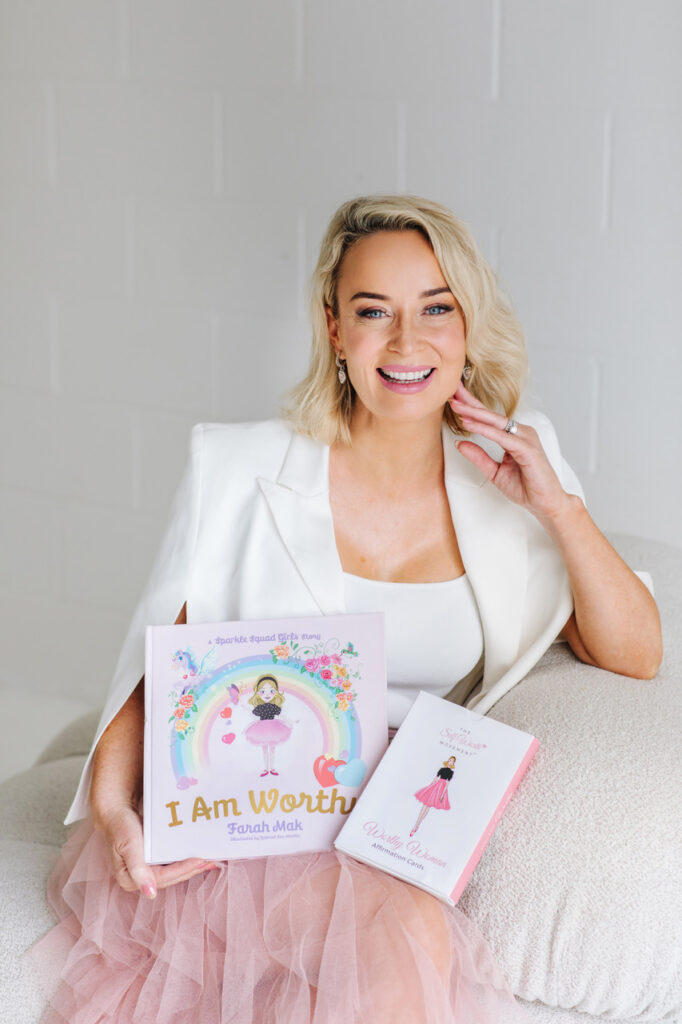
I Am Worthy! Congratulations. What inspired you to write I Am Worthy for children, and what age group did you have in mind?
Thank you! I Am Worthy was born for my daughter and my inner child. It’s written for girls aged 4–8, but the message is ageless. I wanted moms and carers to be impacted too, so when they read it aloud, it heals them as well.
Why is it important to start a self-worth conversation at such a young age?
Because we can prevent the loss of worth that so many of us experience later. Self-worth should be sewn into the spirit before the world teaches girls to question it.
How does writing for children differ from performing for adults?
You must distill truth without diluting it. It’s about using whimsy and imagination to deliver serious messages like worth and identity in digestible, joyful ways.
Many women feel they must ‘achieve more’ before writing a book. What gave you the courage to publish yours?
I stopped waiting for permission. I told myself: “You are worthy now.” That story was a spark demanding to be born. Courage came from honoring that spark for myself, my daughter, and every girl who needs it.
What would you say to a woman who has a story but is scared to share it, especially for the next generation?
Write scared. Speak trembling. Begin anyway. Your story could be someone else’s survival map. The world is waiting for your truth.
If we could speak to young Farah, the girl before the spotlight, what would she be proud of today?
That I never stopped dancing in the face of despair. That I chose to rise, to shine, and to lead. I’d tell her, “You’re not too much. You are the exact amount of magic this world needs.”
What do you think people don’t know about Farah Mak?
That my strength was forged in silence. The sparkle people see today were born from deep, quiet pain and rebuilt with grace and fierce intention.
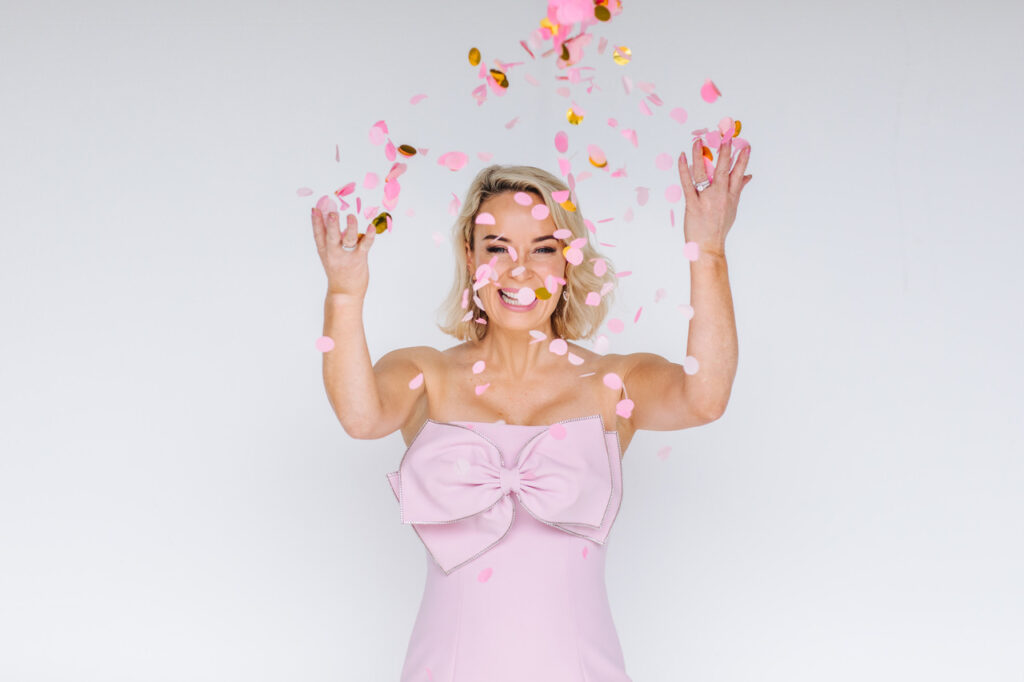
What legacy do you want to leave behind?
A legacy of spark, soul, and strength. A world where women and girls know that their worth is innate, not earned. Where softness is power and sparkle is sacred.
What challenge would you like to leave our readers and listeners to help them play big?
This week, do one thing that honors your sparkle. Wear sequins. Speak your truth. Say “no” with grace. Set a boundary. Take a nap. Choose yourself and shine.
Watch the full Interview here